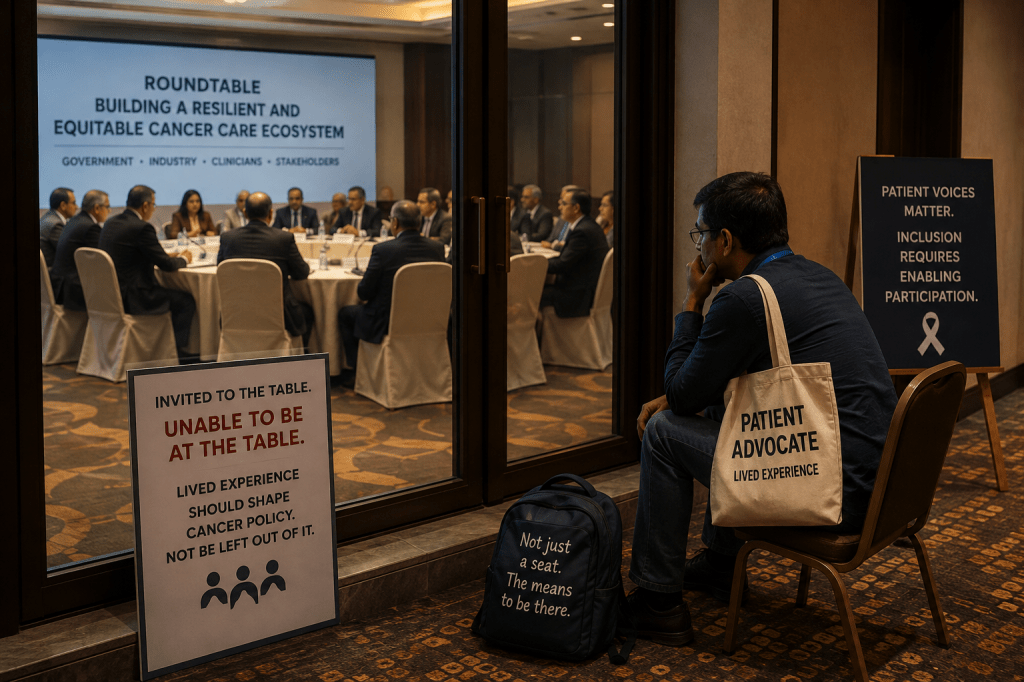
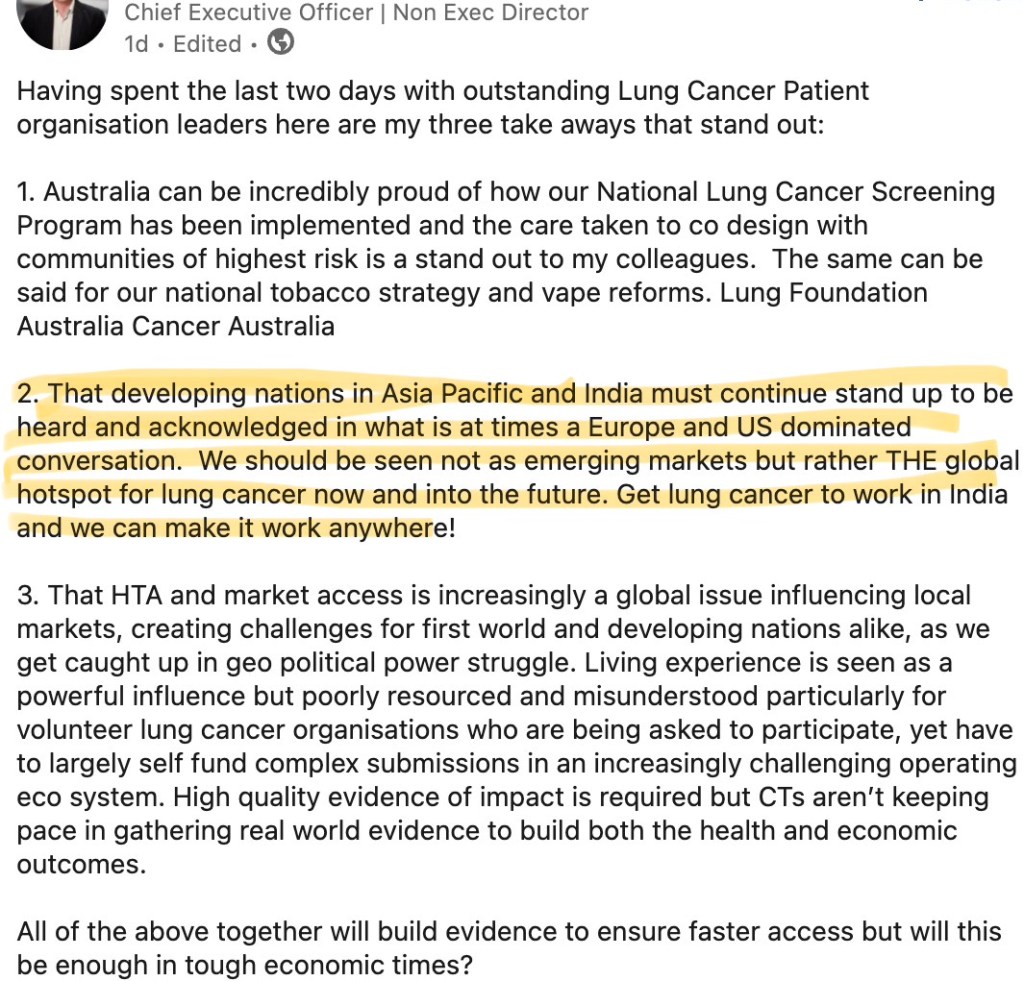
Patient advocacy should not mean unpaid, unsupported participation
There is another uncomfortable dimension to this conversation.
In many mature healthcare and research ecosystems globally, patient engagement is increasingly recognised as a professional contribution, not merely voluntary goodwill. Patient advocates participating in conferences, advisory boards, policy consultations, research initiatives and industry discussions may receive appropriate support for travel, accommodation and other participation-related expenses – and, where the nature of the engagement warrants it, honoraria for their time, expertise and contribution.
The principle is simple:
Lived experience has value.
A patient advocate is not simply a person who happens to have had cancer. They may bring years of experience navigating treatment, healthcare systems, clinical research, financial toxicity, quality-of-life issues and the realities faced by patients and caregivers.
That expertise deserves recognition.
In India, however, we still have a long way to go.
Patient voices are too often treated as an add-on, a symbolic presence or a formality rather than as an essential stakeholder voice. Patients may be invited to a panel, given a few minutes to speak or included in a photograph – but meaningful participation, representation and support are still far from being the norm.
And this creates a paradox.
We say we want patient-centric healthcare, but the patient is often the least empowered participant in the room.
We talk about equity, while the person representing lived experience may have to personally absorb the cost of travelling hundreds or thousands of kilometres to participate.
We talk about valuing patient voice, while expecting that voice to be provided entirely on a voluntary basis, even when other stakeholders are participating as professionals representing well-resourced institutions.
We need to ask ourselves honestly:
Are we inviting patients because we genuinely value what they bring – or because patient inclusion has become something we feel we are expected to demonstrate?
There is a difference between patient presence and patient participation.
And there is an even bigger difference between participation and meaningful influence.
India’s patient advocacy ecosystem is evolving rapidly, and there are certainly organisations, researchers, clinicians, policymakers and industry leaders who are doing this well. But these examples need to become the norm rather than the exception.
Patient advocates should not have to repeatedly justify why their travel needs to be supported.
They should not have to prove that their time has value.
And they should not have to choose between contributing to healthcare policy and personally bearing costs that other stakeholders would ordinarily not be expected to bear.
If we genuinely believe that nothing about patients should be decided without patients, then we must also create the practical conditions that allow patients to be present, heard and respected.
Patient inclusion cannot remain a showpiece. It has to become a standard.